
In Singapore, “near the MRT” can mean a sheltered three-minute walk or a humid fifteen-minute detour across a major road. For a first visit, that difference shapes every morning. The best area to stay is therefore not simply the district with the most famous name, but the station that connects your real itinerary with the fewest changes.
Best areas to stay in Singapore near MRT: the short answer
City Hall and Bugis are the most forgiving all-round choices for a first visit. Chinatown and Tanjong Pagar suit travellers who want heritage streets and food close to the CBD. Orchard fits shopping-led trips and travellers who prefer polished hotels. Marina Bay buys spectacle and proximity to major landmarks, while Little India and Kampong Glam deliver stronger street character and often a more varied price range.
| Area | Useful MRT stations | Best for | Trade-off |
|---|---|---|---|
| City Hall / Bugis | City Hall, Bugis, Bencoolen | Balanced first visits | Central convenience can cost more |
| Chinatown / Tanjong Pagar | Chinatown, Maxwell, Tanjong Pagar, Outram Park | Food, heritage and CBD access | Street atmosphere varies block by block |
| Orchard | Orchard, Somerset, Orchard Boulevard | Shopping and full-service hotels | Less old-Singapore character |
| Marina Bay | Bayfront, Downtown, Promenade | Landmarks and short luxury stays | Premium pricing and quieter local evenings |
| Little India / Kampong Glam | Little India, Rochor, Jalan Besar, Bugis | Culture, dining and value variety | Choose the exact street carefully |
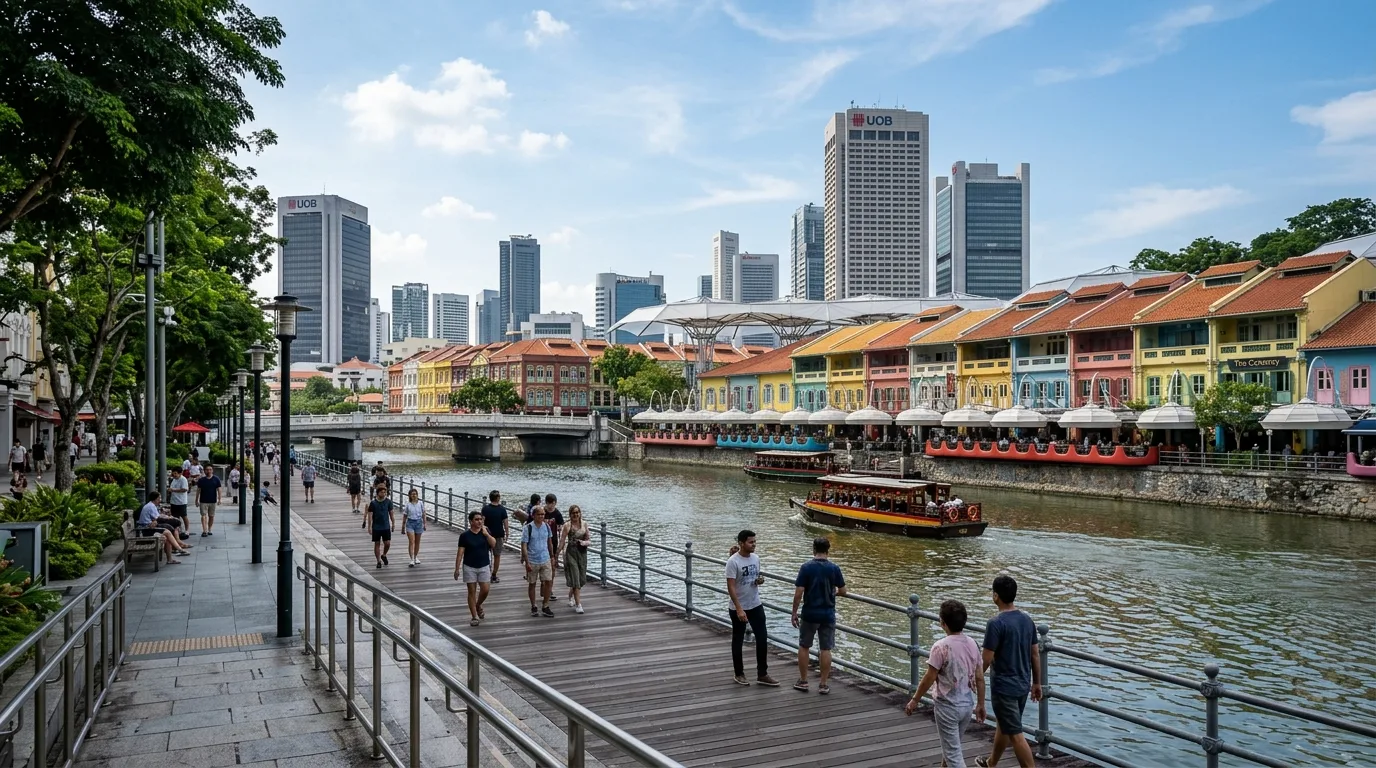
The stations that make Singapore easier
City Hall: the low-friction first-timer base
City Hall sits where major lines and central walking routes meet. It places the Civic District, Esplanade and Marina Bay within a manageable orbit and reduces the need to treat every journey as an expedition. It is particularly useful when a four-day trip must balance landmarks, museums, food and evening plans.
Bugis: connectivity with more street life
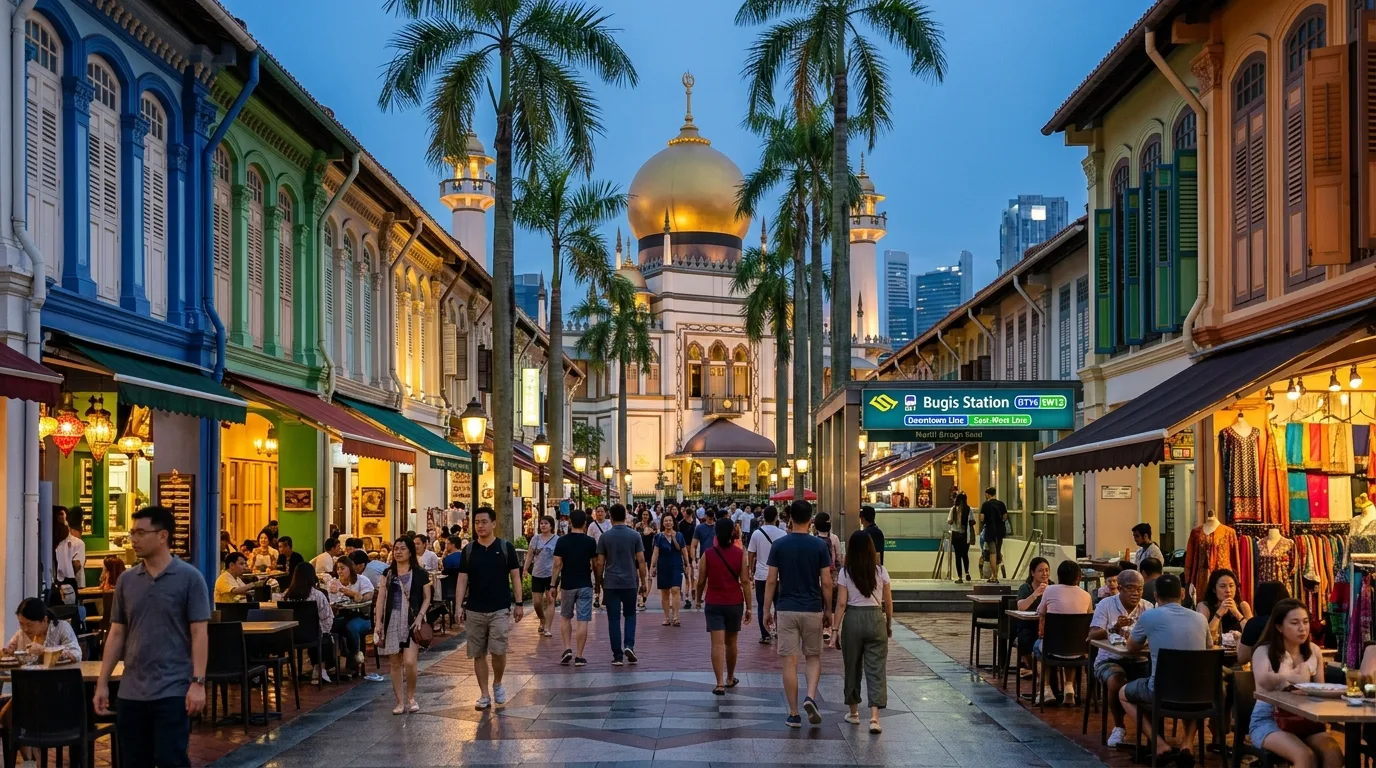
Bugis joins the East–West and Downtown lines, while nearby Bencoolen and Rochor widen the network. The practical gain is choice: airport-oriented journeys, Marina Bay, Chinatown and Botanic Gardens can all be reached without forcing every trip through the same interchange. Kampong Glam and Arab Street add colour after the business-day crowds thin.
Chinatown and Outram Park: food before formality
Chinatown works when the day should begin with coffee-shop tables rather than shopping-mall corridors. The Downtown and North East lines meet here; nearby Outram Park adds further connections. Maxwell, Telok Ayer and Tanjong Pagar create a walkable triangle, but two hotels described as “Chinatown” may sit on very different slopes and streets.
Orchard: a comfortable, controlled landing
Orchard is easy to understand, rich in hotel choice and practical in heavy rain because malls and covered connections provide refuge. It is strongest for shopping, medical visits and travellers who want familiar full-service facilities. For hawker-centre mornings and heritage evenings, other areas feel more immediate.
Bayfront and Downtown: pay for the postcard
Marina Bay gives short-stay travellers the skyline outside the door. Bayfront is connected by the Downtown and Circle lines, and the area works well when Gardens by the Bay, the waterfront and convention venues dominate the trip. The compromise is that neighbourhood spontaneity and affordable late dining may require a short train ride.
Before booking, verify lines and station changes on the Land Transport Authority’s current MRT map. Singapore’s network evolves; an old blog map should never overrule the official one.
Match the area to the traveller
- First visit, four nights: City Hall or Bugis for balanced access.
- Food-first couple: Chinatown, Maxwell or Tanjong Pagar.
- Family with stroller: prioritise sheltered access, lifts and a direct station route over a fashionable address.
- Business traveller adding a weekend: Downtown, City Hall or Tanjong Pagar, depending on the meeting venue.
- Luxury stopover: Marina Bay for visual impact; Orchard for shopping and hotel depth.
- Longer, budget-aware stay: consider Lavender, Farrer Park or Novena, but calculate door-to-door time.
The hotel-location check most travellers skip
- Open walking directions from the hotel entrance to the station entrance, not the station pin.
- Check whether the route is sheltered and whether lifts serve the platform.
- Look at the line used by your first two morning destinations.
- Test the late-evening route back from your likely dining area.
- Compare room size, connecting-room rules and breakfast value; central location cannot repair a poor room fit.
- Keep airport arrival separate from daily sightseeing. Read our Changi Airport to Singapore guide for that decision.
For a food-focused extension, use our three-day Singapore food itinerary. Families should also compare family-friendly Singapore hotels near MRT.
Frequently asked questions
How close should a Singapore hotel be to MRT?
There is no universal distance, but a genuinely short and sheltered walk is valuable in heat or rain. Judge the route, crossings and station entrance—not the marketing distance.
Is Marina Bay the best area for every first-time visitor?
No. It is exceptional for landmark access and skyline atmosphere, but Bugis or City Hall may create a more balanced trip, while Chinatown offers stronger food and heritage texture.
Can I stay outside the centre to save money?
Yes, if the hotel sits on a useful direct line. Compare the saving with extra journey time, late-night convenience and the cost of larger taxi use.
LIVE HOTEL AVAILABILITY
Choose the station before you choose the room
Compare Singapore hotels by exact location, dates and room conditions, then book through TheStayGlobe.
Live prices, room conditions and secure checkout are provided through TheStayGlobe’s Nuitee-powered booking service.