
New York’s best observation deck is not automatically the highest one. The real question is which skyline you want inside your photograph: the Empire State Building framed against Manhattan, the open-air drama of Midtown, the harbour and Statue of Liberty from Downtown, or an immersive room where mirrors compete with the view.
New York observation decks compared: the quick choice
- Top of the Rock: best for a classic view that includes the Empire State Building and opens north toward Central Park.
- Empire State Building: best for Art Deco history and the feeling of standing on the icon itself.
- Edge: best for an exposed, contemporary outdoor experience on Manhattan’s west side.
- SUMMIT One Vanderbilt: best when immersive design and social photography matter as much as the skyline.
- One World Observatory: best for Lower Manhattan, the harbour and a fully indoor, high-altitude perspective.
| Deck | Signature advantage | Best paired with | Think twice if |
|---|---|---|---|
| Top of the Rock | Empire State Building in the view | Rockefeller Center, Fifth Avenue, MoMA | You want the Empire State experience itself |
| Empire State Building | Open-air icon and museum-style story | Koreatown, Flatiron, Bryant Park | Your photograph must contain the building |
| Edge | Dramatic outdoor platform and westward light | High Line, Hudson Yards, Chelsea | Exposed heights reduce your enjoyment |
| SUMMIT One Vanderbilt | Immersive interiors and reflections | Grand Central, Midtown East | You want a quiet, purely architectural view |
| One World Observatory | Harbour, Downtown and three indoor levels | 9/11 Memorial, Oculus, Battery | Open-air access is essential |
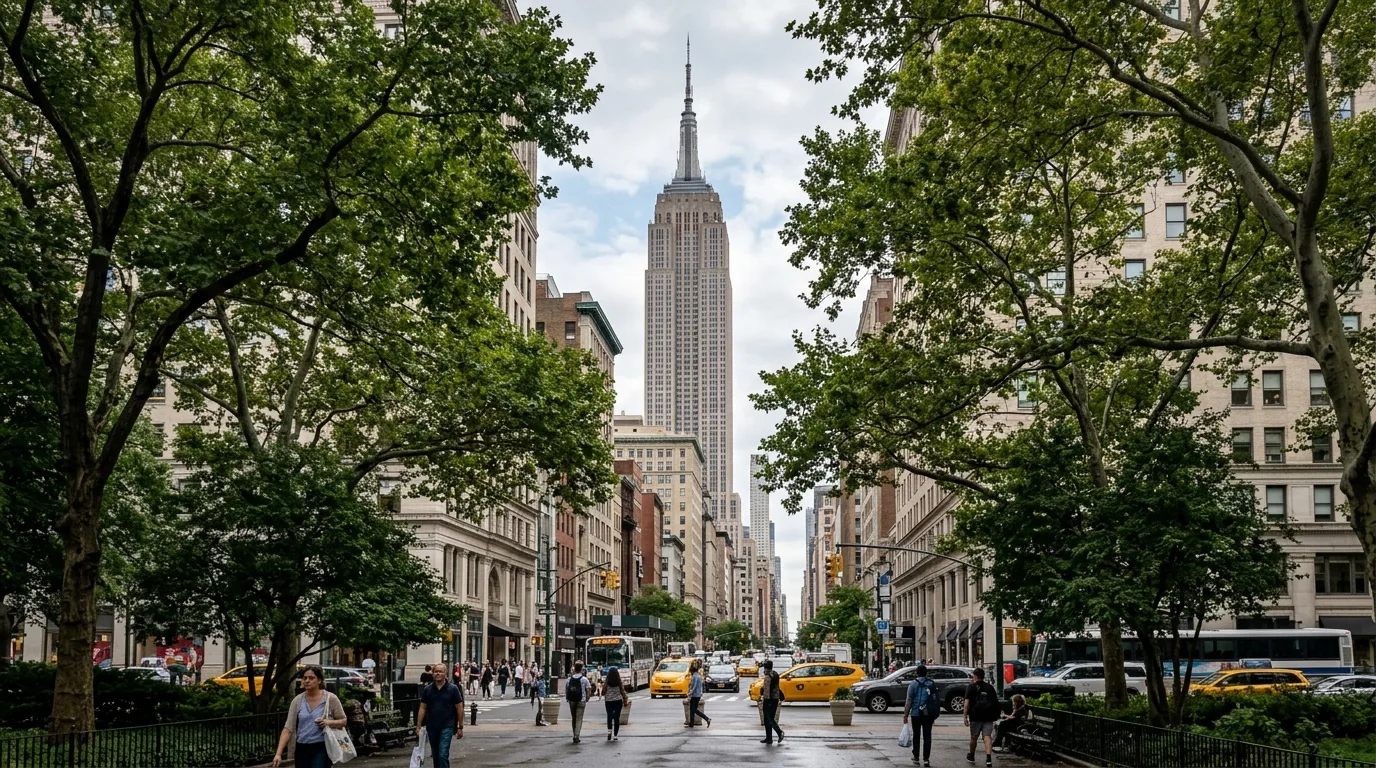
What each New York observation deck feels like
Top of the Rock: the composed skyline
This is the photographer’s answer when the Empire State Building must anchor the frame. Midtown appears layered rather than abstract, and the northward view creates a visual conversation with Central Park. Its Rockefeller Center location also makes it easy to place the deck inside a broader walking day rather than treating it as a separate expedition.
Empire State Building: inhabit the legend
The Empire State Building is more than an elevator to a view. Its Art Deco setting and exhibits give the ascent a narrative, while the 86th-floor open-air deck provides the wind-and-city sensation many visitors imagine before arriving. The optional 102nd-floor experience is enclosed with floor-to-ceiling windows; current ticket conditions should be checked on the official Empire State Building site.
Edge: sky, glass and the Hudson
Edge projects outward from Hudson Yards, making the structure part of the experience. It works naturally with the High Line and Chelsea, and late-afternoon light over the Hudson can be striking. Travellers uncomfortable with glass floors or exposed edges should not choose it simply because it dominates social feeds.
SUMMIT One Vanderbilt: spectacle inside the spectacle
SUMMIT uses reflective rooms and installations to transform the visitor into part of the image. It is energetic, theatrical and highly photographable. That also means crowds, reflections and sensory intensity are part of the product. Choose it for an experience, not solely for a calm study of Manhattan’s architecture.
One World Observatory: Downtown from above
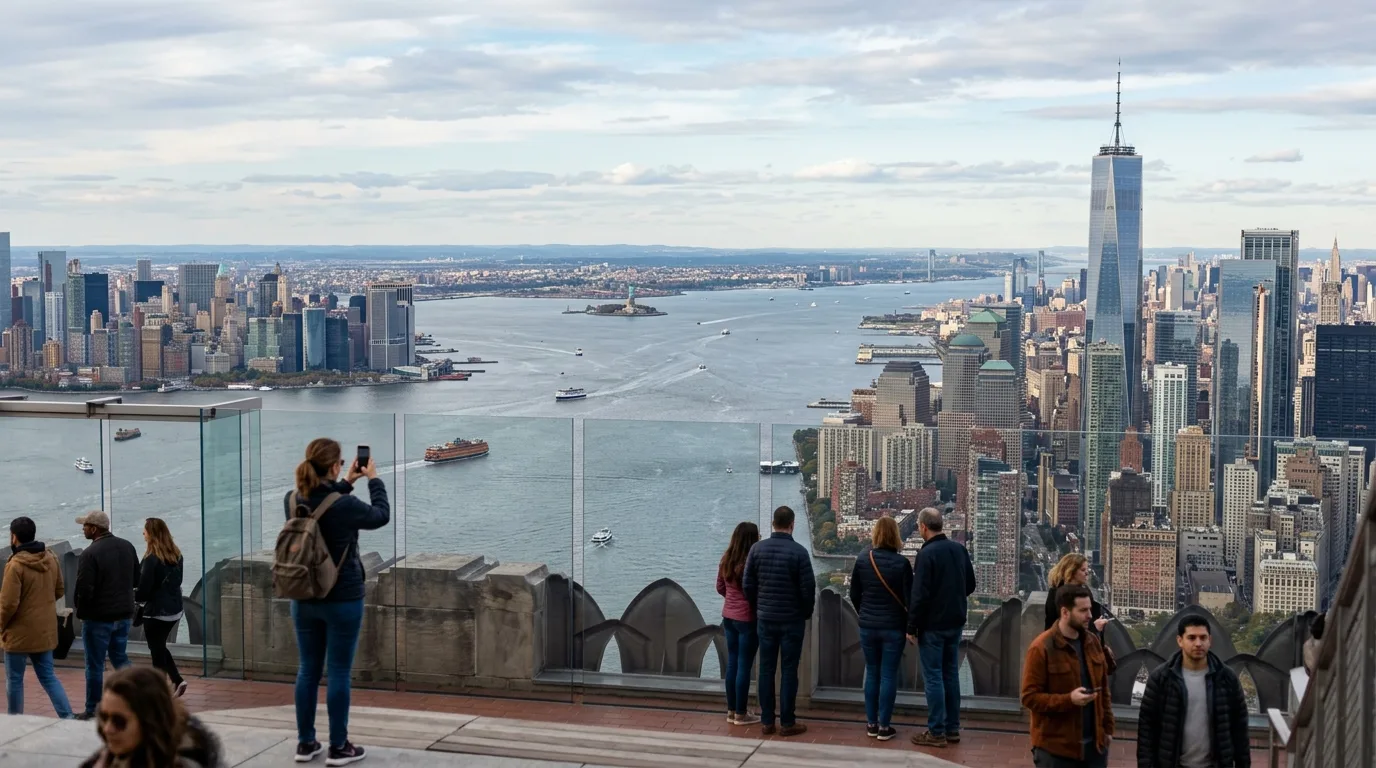
Located across the 100th, 101st and 102nd floors, One World Observatory offers an indoor panorama centred on the harbour, rivers and Lower Manhattan. It is the logical deck for a Downtown day and a strong weather-resilient choice, although cloud can obscure any high view. Confirm access details on the official visitor page.
Sunset is beautiful—and operationally difficult
A sunset ticket promises daylight, colour and night lights in one visit, which is why it is often the busiest and most expensive window. Arrive with enough margin for security and elevators, but do not build a tight theatre or dinner reservation immediately afterward. Weather matters more than the hour: a clear late morning can outperform a cloudy sunset.
If photography is the priority, consider the direction of light. West-facing views become dramatic late in the day; reflective interiors can be difficult in harsh sunlight. After dark, interior reflections may interfere with photographs through glass, while open-air decks give cleaner night images if weather allows.
Should you use a New York attraction pass?
A pass can work when an observation deck is one part of a dense, preselected group of paid attractions. It fails when travellers add mediocre stops merely to manufacture a saving. Check whether your preferred deck and time require reservations, compare the pass with direct prices for your date, and read cancellation terms. Never assume a pass removes security lines.
Hotel geography matters too. A Midtown base supports Top of the Rock, Empire State and SUMMIT; Chelsea or Hudson Yards favours Edge; Lower Manhattan makes One World effortless. Compare our best New York areas for first-time visitors and airport-to-Manhattan guide before fixing several timed reservations.
Frequently asked questions
Which deck has the best view of the Empire State Building?
Top of the Rock is the classic choice because the Empire State Building becomes the central subject. Edge and SUMMIT provide different angles.
Which observation deck is best in bad weather?
One World Observatory and the upper Empire State experience offer enclosed viewing, but low cloud can still erase the skyline. Review the operator’s current weather and refund policy before booking.
Should I visit two decks?
Only when they provide genuinely different geography or atmosphere—such as one Midtown view and one Downtown view. For most first trips, one carefully chosen deck leaves more time for New York at street level.
LIVE HOTEL AVAILABILITY
Put the right skyline within reach
Compare New York hotels by neighbourhood, exact dates and room conditions before reserving timed attractions.
Live prices, room conditions and secure checkout are provided through TheStayGlobe’s Nuitee-powered booking service.